Essential Early Childhood Numeracy Resources for Parents
- Anna Kapnoullas
- 5 days ago
- 4 min read
Early childhood is a critical period for developing foundational skills in numeracy. As parents, you play a vital role in fostering your child's mathematical understanding and love for numbers. This blog post will explore essential resources that can help you support your child's numeracy development at home. From engaging books to interactive games, we will cover a variety of tools that make learning fun and effective.
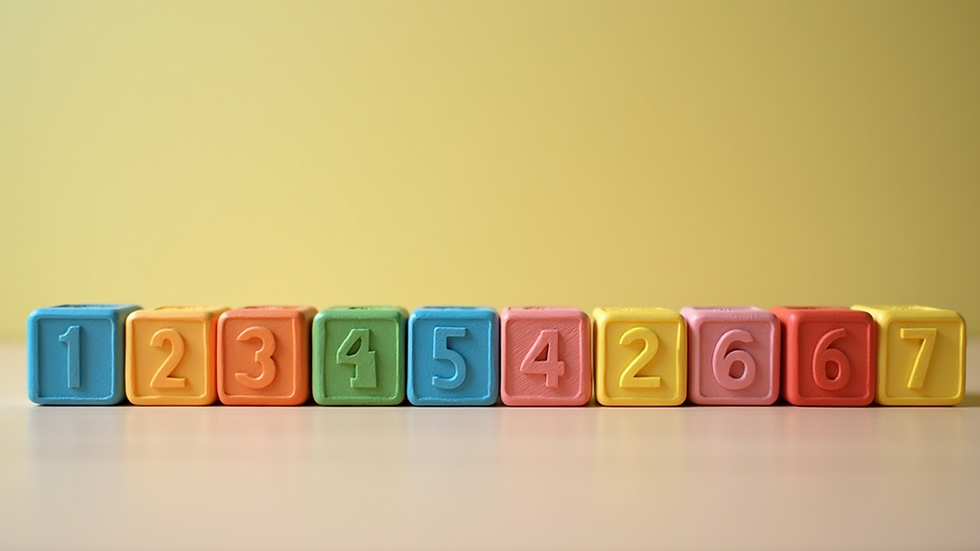
Understanding Early Childhood Numeracy
Numeracy is more than just knowing how to count. It encompasses a range of skills, including:
Counting: Recognizing numbers and understanding their order.
Number Sense: Grasping the concept of quantity and how numbers relate to each other.
Basic Operations: Introducing addition, subtraction, multiplication, and division in simple forms.
Patterns and Relationships: Recognizing and creating patterns, which is foundational for algebraic thinking.
These skills are essential for your child's future academic success and everyday problem-solving. By integrating numeracy into daily activities, you can create a rich learning environment.
Engaging Books for Young Learners
Books are a fantastic way to introduce numeracy concepts to children. Here are some recommended titles that make learning numbers enjoyable:
1. "Ten Black Dots" by Donald Crews
This book uses simple illustrations to show how ten black dots can create various objects. It encourages counting and visual recognition of numbers in a fun way.
2. "Chicka Chicka 1 2 3" by Bill Martin Jr. and Michael Sampson
A playful take on counting, this book features numbers climbing up a coconut tree. The rhythmic text and colorful illustrations make it a favorite among young readers.
3. "How Many Snails?" by Paul Giganti Jr.
This interactive book invites children to count snails and other objects on each page. It promotes active participation and reinforces counting skills.
4. "One Fish Two Fish Red Fish Blue Fish" by Dr. Seuss
While primarily a storybook, it introduces numbers in a whimsical way. The playful language and illustrations captivate children's attention while subtly teaching them about counting.
5. "The Very Hungry Caterpillar" by Eric Carle
This classic story not only teaches counting but also introduces concepts of days of the week and basic addition as the caterpillar eats through various foods.
Interactive Games and Activities
Games are an excellent way to reinforce numeracy skills while keeping your child engaged. Here are some fun activities you can do together:
1. Number Hunt
Hide numbers around your home or yard and have your child find them. Once they collect all the numbers, ask them to arrange them in order. This activity promotes number recognition and sequencing.
2. Counting Songs
Incorporate counting into songs. Classic nursery rhymes like "Five Little Ducks" or "Ten in the Bed" encourage children to count along while enjoying music.
3. Board Games
Games like "Chutes and Ladders" or "Candy Land" involve counting spaces and can help reinforce number recognition and counting skills in a fun, social setting.
4. Cooking Together
Involve your child in cooking by measuring ingredients. This hands-on activity teaches them about quantities, fractions, and following sequences.
5. Building Blocks
Use building blocks to create structures while counting the number of blocks used. This activity promotes spatial awareness and basic addition.
Digital Resources and Apps
In today's digital age, there are numerous apps and online resources that can enhance your child's numeracy skills. Here are some highly-rated options:
1. Endless Numbers
This app introduces children to numbers and basic math concepts through interactive animations and games. It’s engaging and educational, making learning fun.
2. Todo Math
Designed for preschoolers and kindergarteners, Todo Math offers a variety of activities that cover counting, addition, and subtraction in a playful way.
3. Monkey Math School Sunshine
This app features a variety of games that teach counting, addition, and subtraction through fun characters and colorful graphics.
4. PBS Kids Games
PBS Kids offers a range of free games that incorporate math skills. Characters from popular shows guide children through various numeracy challenges.
5. Starfall
Starfall is an educational website that provides interactive math activities for young learners. It covers basic counting, addition, and number recognition.
Everyday Activities to Foster Numeracy
Incorporating numeracy into daily routines can significantly enhance your child's learning experience. Here are some simple ways to do this:
1. Shopping Together
Take your child grocery shopping and involve them in counting items, comparing prices, and calculating totals. This real-world application of math makes learning relevant.
2. Setting the Table
Ask your child to help set the table by counting plates, forks, and cups. This activity reinforces counting and introduces concepts of one-to-one correspondence.
3. Gardening
If you have a garden, involve your child in planting seeds. Count the seeds together and discuss how many plants will grow. This teaches counting and the concept of growth.
4. Time Management
Use a clock to teach your child about time. Discuss the hours and minutes while planning daily activities, helping them understand the concept of time.
5. Traveling
When traveling, involve your child in counting the number of cars, animals, or trees you see. This keeps them engaged and reinforces counting skills in a fun way.
Creating a Numeracy-Friendly Environment
To support your child's numeracy development, create an environment that encourages exploration and learning. Here are some tips:
1. Use Visual Aids
Display numbers around your home, such as on a number line or a calendar. This constant exposure helps reinforce number recognition.
2. Incorporate Math into Play
Choose toys that promote numeracy, such as puzzles, counting bears, or shape sorters. These toys make learning math concepts enjoyable.
3. Encourage Questions
Foster a curious mindset by encouraging your child to ask questions about numbers and math. Engage in discussions that promote critical thinking.
4. Limit Screen Time
While digital resources can be beneficial, ensure that your child has plenty of opportunities for hands-on learning and real-world experiences.
5. Be a Role Model
Demonstrate your own interest in math by discussing numbers in everyday life. Show enthusiasm for learning and problem-solving.
Conclusion
Supporting your child's numeracy development is a rewarding journey that can be filled with fun and engaging activities. By utilizing books, games, and everyday experiences, you can create a rich learning environment that fosters a love for numbers. Remember, the goal is not just to teach your child how to count but to help them understand the world of mathematics in a meaningful way.
As you explore these resources and activities, keep in mind that every child learns at their own pace. Celebrate their progress and encourage their curiosity. With your support, your child will build a strong foundation in numeracy that will benefit them throughout their life.


Comments